Marketing Funnels That Actually Convert in 2026 (No Fluff)

Most funnels fail for one boring reason: they were built to look impressive in a screenshot, not to move a real person from curious to buying. If you’ve spent money on a funnel builder, filled it with templates, and watched it convert at under 1%, you’re not bad at marketing. You built the wrong thing for how people actually buy now.
I ran that exact experiment for the better part of two years. Fancy quiz funnels, seven-email nurture sequences, upsell chains that would make a used car salesman blush. Some of it worked a little. Most of it wasted my time and my list’s patience. What finally changed things wasn’t a new tool, it was cutting the funnel down to the parts that actually do the work.

Key Takeaways
- A funnel that converts in 2026 has fewer steps than the ones that worked in 2021, because attention spans and trust levels have both dropped.
- The offer and the first five seconds of your landing page matter more than any automation sequence you build behind it.
- AI tools now make it realistic for one person to test three offer variations in a week instead of three months, which changes how you should approach validation.
- Most “funnel leaks” people try to fix with copy tweaks are actually offer problems or traffic-quality problems in disguise.
Why the old funnel playbook stopped working
The classic funnel template, opt-in page, tripwire, core offer, upsell, downsell, was built for a time when cold traffic still trusted a squeeze page. That trust is mostly gone. People have been burned by enough “free guide” pop-ups that they now assume anything asking for their email upfront is a trap.
What replaced it isn’t a fancier funnel. It’s a shorter one with more proof built directly into the page instead of promised further down the sequence. If you’re still asking for an email before you’ve shown a single ounce of value, you’re losing people who would have converted if you’d just let them see the thing first.
The three-step funnel that’s actually working right now
Strip away the theory and here’s the structure that’s been converting for me and for the people I coach through the blog:
- A value-first landing page. Not a squeeze page. A page that gives away a genuinely useful piece of the puzzle, a checklist, a short breakdown, a tool, before asking for anything. The ask comes after the value, not before.
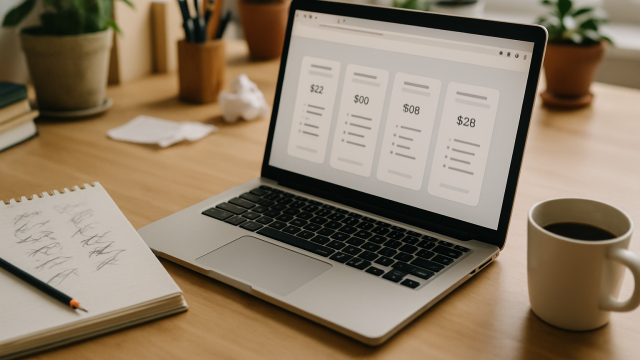
- One clear offer, one clear price. No three-tier pricing table with a “recommended” badge trying to nudge you toward the middle option. One offer, explained plainly, with the objections answered right there on the page instead of hidden in an FAQ accordion nobody opens.
- A short follow-up sequence, not a long one. Three to five emails, each answering a specific objection you know your audience has, not a drip campaign designed to “build a relationship” over three weeks. People decide faster than that now, or they forget you entirely.
That’s it. No quiz, no webinar funnel, no fifteen-step automation map. The complexity people add to funnels is usually there to make the marketer feel like they’ve done enough work, not because the customer needed it.
Where AI actually changes the game here
The honest use of AI in funnel building isn’t writing your sales copy for you and hoping it converts. It’s letting you test faster than you ever could manually. I used to write one landing page, run it for three weeks, and then decide if it worked. Now I can draft four variations of the same offer’s headline and opening paragraph in an afternoon and have real click data within days.
That speed is the actual unlock. Not better words, faster feedback. If your funnel isn’t converting, the fastest way to find out why isn’t to rewrite the whole thing from a hunch. It’s to change one variable, usually the headline or the price framing, and let the traffic tell you what’s wrong. I keep a running log of every test I run and what it changed, and I share the pattern breakdowns in the updates section because most of the “aha” moments came from small, boring tests, not big creative swings.
The mistake almost everyone makes: fixing copy when the offer is broken
Here’s a scenario you’ll recognize. Your opt-in rate looks fine, people are clicking through, but almost nobody buys the actual offer at the end. The instinct is to rewrite the sales page. Nine times out of ten, that’s not the problem.
The problem is usually one of three things: the price doesn’t match the perceived value, the offer solves a problem people don’t feel urgently enough, or you’re targeting traffic that was never going to buy this specific thing in the first place. No amount of copywriting fixes a mismatch between offer and audience. I learned this the expensive way, spending weeks polishing a sales page for an offer that simply wasn’t wanted by the people seeing it. The page got better. The conversion rate didn’t move.
Before you touch a single word of copy, ask yourself honestly whether the offer would convert if you just described it in one plain sentence to a friend. If that sentence doesn’t make them lean in, no funnel structure will save it.
What a realistic build timeline looks like
If you’re doing this around a full-time job, here’s what’s actually achievable. Week one, build the value-first landing page and the single offer page, keep both rough rather than perfect. Week two, drive a small amount of traffic and watch where people drop off, not just whether they convert. Week three, fix the single biggest drop-off point, usually right after the headline or right before the price. Week four, write your short follow-up sequence based on the actual objections you’re hearing from real replies, not the ones you assumed.
That’s a month to a working funnel, not a “make six figures by Friday” claim. It’s slower than the hype promises and faster than most people expect once they stop rebuilding the whole thing every time one test underperforms.

Frequently Asked Questions
How many steps should a marketing funnel have in 2026?
Fewer than you think. A value page, one offer page, and a short follow-up sequence of three to five emails outperforms most of the longer, multi-tripwire funnels people were building a few years ago. Complexity usually serves the marketer’s ego more than the customer’s decision.
Why is my funnel getting traffic but no sales?
Check the offer before you touch the copy. Low conversion after decent click-through usually means a mismatch between what you’re selling and what that specific audience actually wants right now, not a writing problem.
Can AI tools actually build a converting funnel for me?
AI is genuinely useful for speeding up testing, drafting variations, and analyzing where people drop off, but it can’t tell you what your audience actually wants to buy. That still comes from talking to real people and watching real behavior.
Do I need paid traffic to test a funnel properly?
No. A small, honest batch of organic traffic, even fifty to a hundred visitors, will show you where people hesitate. You don’t need scale to find your biggest leak, you need attention to where people actually stop reading or clicking.
If you want to see how this plays out with real numbers and real timelines rather than theory, the earnings disclaimer page is worth a read so you know exactly what kind of results are realistic before you build anything.